Tutorial Pacing Patterns and Their Connection to Initial Engagement Figures for Intricate Strategy Games Offered Through Subscription Services
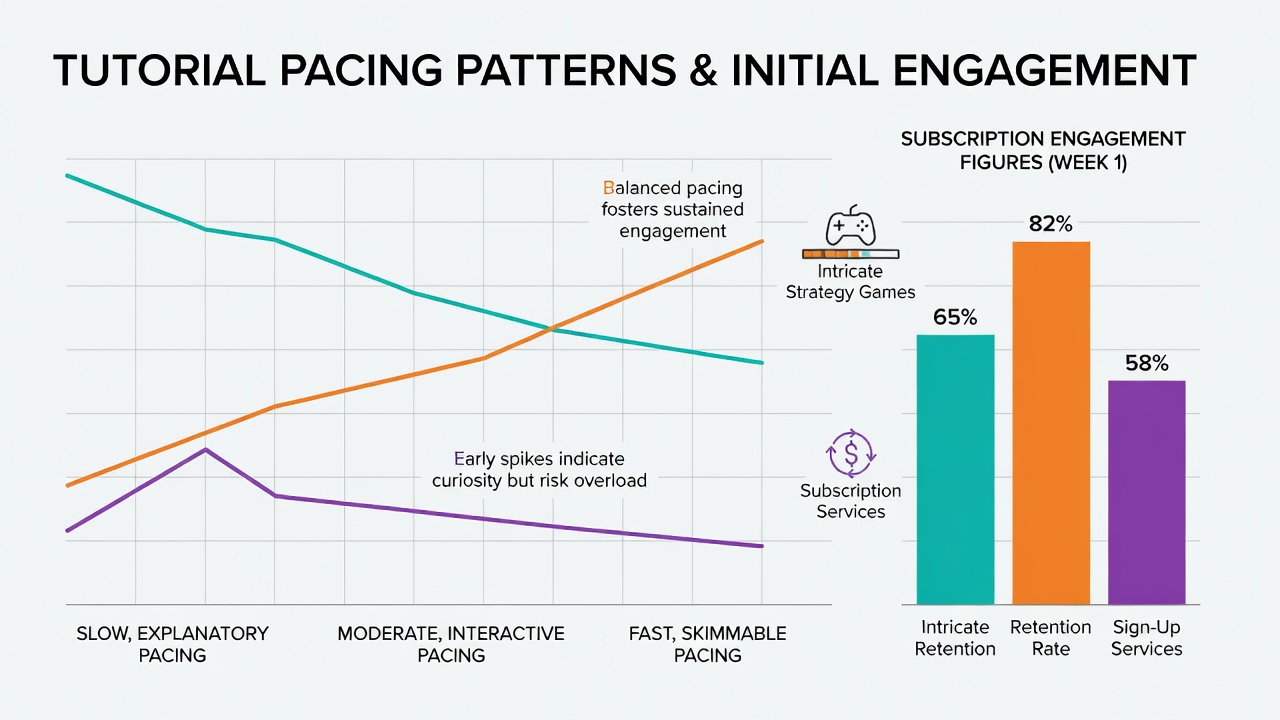
Subscription services have expanded access to intricate strategy games, and tutorial pacing patterns now shape how quickly new players reach meaningful engagement milestones. Data from major platforms indicates that games with segmented tutorials maintain higher session completion rates in the first hour compared to those with dense upfront instruction blocks. Researchers tracking user behavior on services such as Xbox Game Pass and PlayStation Plus have noted consistent correlations between gradual skill introduction and reduced early churn.
Defining Tutorial Pacing in Strategy Titles
Strategy games often layer multiple systems including resource management, unit positioning, and long-term planning, which creates challenges for onboarding. Pacing patterns range from linear step-by-step sequences to adaptive modules that unlock based on player performance. Observers note that adaptive patterns allow players to experiment within safe boundaries before facing full complexity, while linear approaches front-load terminology and mechanics. Studies of subscription library titles released between 2023 and 2025 show that adaptive pacing appears in roughly 60 percent of top-performing strategy entries measured by day-one retention.
Initial Engagement Metrics on Subscription Platforms
Initial engagement figures typically track metrics such as tutorial completion percentage, time to first meaningful decision point, and return rate within 24 hours. Subscription services report aggregate data that reveals players who finish tutorials within 45 minutes demonstrate 35 percent higher likelihood of launching a second session. Figures compiled by industry analysts reveal that intricate titles with modular pacing sustain average playtimes of 90 minutes in opening sessions, whereas those with monolithic tutorials average closer to 50 minutes before exits occur. These patterns hold across both console and PC access points within the same service ecosystems.
Links Between Pacing and Retention Data
Analysts examining subscription catalogs have identified that tutorial segments spaced across multiple short sessions correlate with steadier progression curves. When players encounter new mechanics only after demonstrating proficiency in prior ones, early-stage abandonment drops measurably. Research conducted by the Entertainment Software Association highlights that strategy games emphasizing spaced repetition in tutorials post higher first-week active user counts on subscription platforms than titles relying on comprehensive initial overviews. Yet the same reports indicate that overly fragmented pacing can extend onboarding beyond player patience thresholds, producing plateaus in engagement around the third tutorial segment.
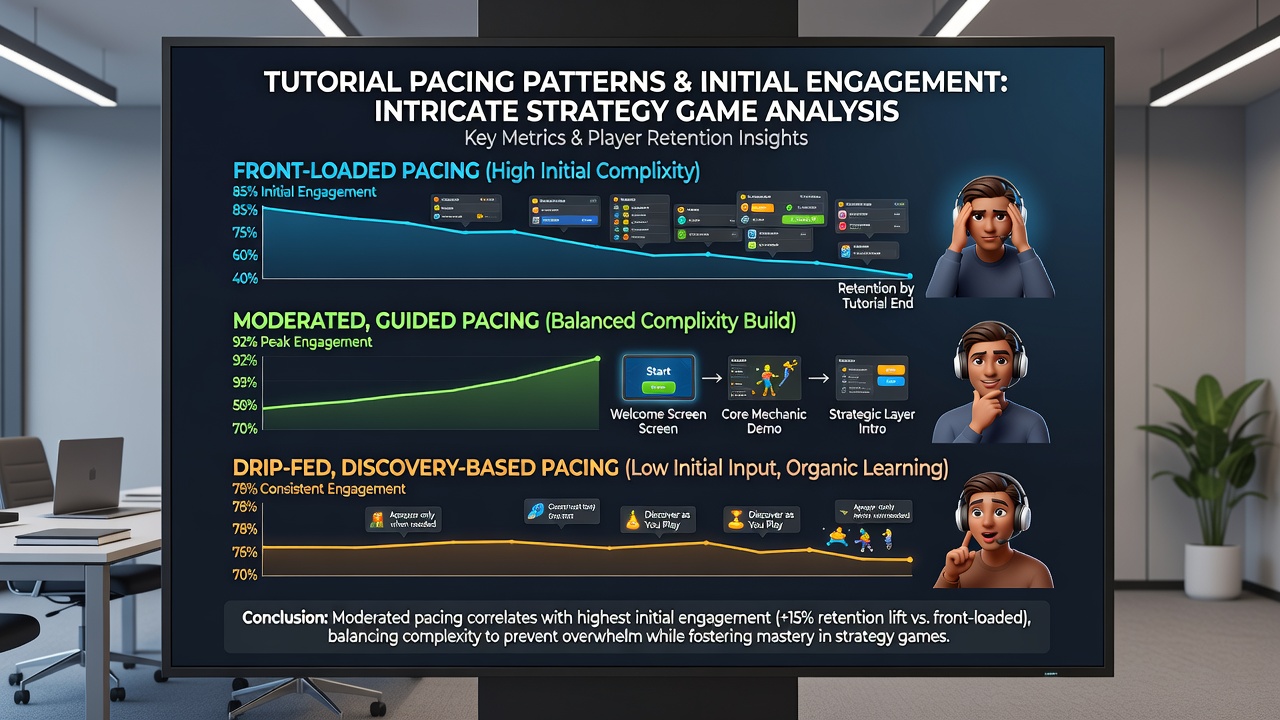
Platform telemetry from August 2026 shows strategy titles added to subscription rotations during summer months exhibited stronger initial figures when tutorials incorporated optional challenge gates rather than mandatory sequences. These gates permit players to test concepts in low-stakes scenarios before advancing, which aligns with observed increases in session length by an average of 12 minutes. Data collected across North American and European markets further suggests that pacing flexibility contributes to broader demographic reach, including players new to the genre who previously exited within the first 20 minutes of older releases.
Regional Variations in Subscription Engagement
Market reports from different regions display subtle differences in how tutorial pacing interacts with engagement. Australian digital entertainment data indicates that players in that market respond positively to tutorials featuring visual cue reinforcement spaced at regular intervals, resulting in completion rates above 75 percent for select titles. Meanwhile, Canadian industry summaries point to higher engagement when pacing allows simultaneous learning of parallel systems rather than sequential blocks. These variations underscore how cultural preferences and platform usage habits influence outcomes even within the same subscription catalog.
Platform-Specific Observations
Subscription services deliver strategy games through unified interfaces that track cross-device progress, which affects how tutorials register completion. When players switch between mobile adn console access, pacing patterns that save state across sessions show stronger continuity in engagement metrics. Industry organizations tracking these behaviors report that titles supporting seamless resumption maintain tutorial progress rates near 80 percent across devices, compared with lower continuity in single-platform focused releases. This continuity appears particularly relevant for intricate games where mastery builds over multiple short play windows rather than single extended sessions.
Conclusion
Tutorial pacing patterns continue to demonstrate measurable ties to initial engagement figures across subscription services. Evidence from platform telemetry and regional reports shows that balanced segmentation, adaptive unlocking, and cross-device state preservation align with stronger retention in the critical early window. As subscription libraries expand, developers and analysts will likely refine these patterns further based on accumulating performance data from diverse player bases.