Studio Size Effects on Endurance Metrics for Co-op Survival Titles Released Across Digital Marketplaces
Co-op survival titles continue to occupy prominent positions on digital marketplaces where endurance metrics such as average session length, long-term retention rates, and cumulative playtime hours receive consistent tracking from platform operators. Researchers have compiled platform data that separates outcomes according to studio size categories including small independent teams under 20 employees, mid-sized studios between 20 and 100 employees, and large studios exceeding 100 employees. Data collected through July 2026 shows measurable differences in how these categories sustain player engagement after initial launch windows close.
Platform Data Patterns Across Marketplaces
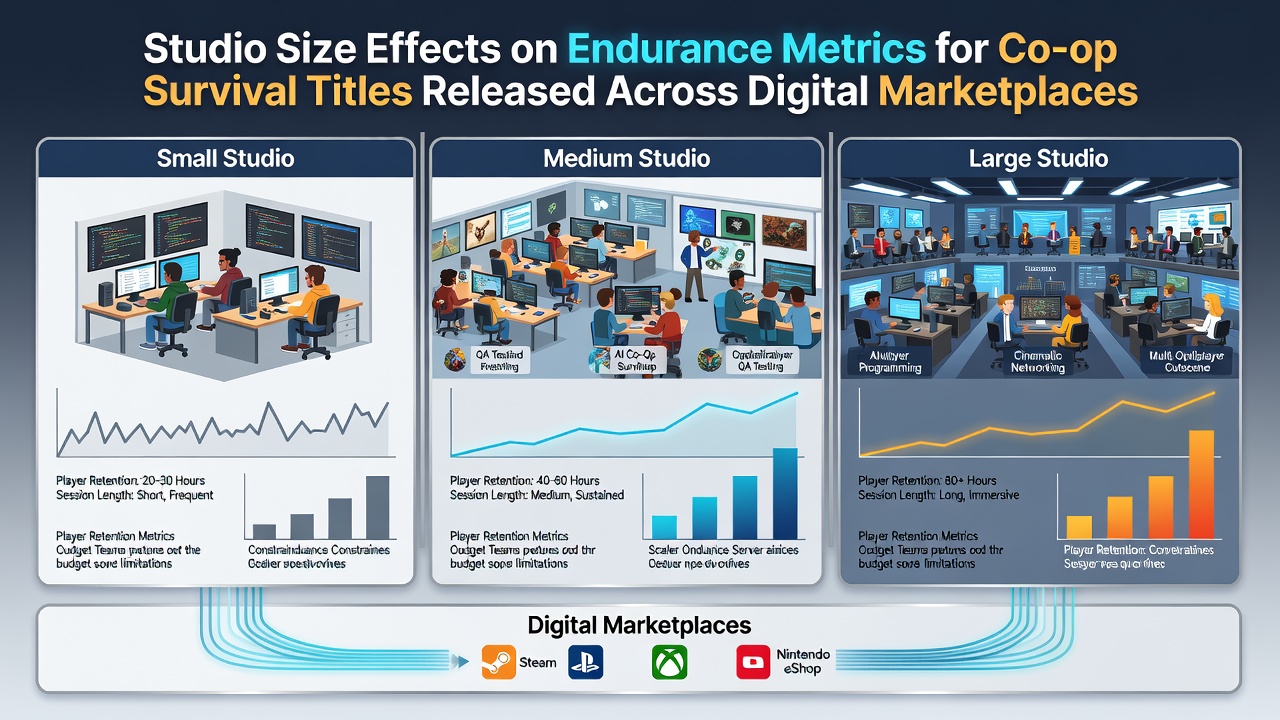
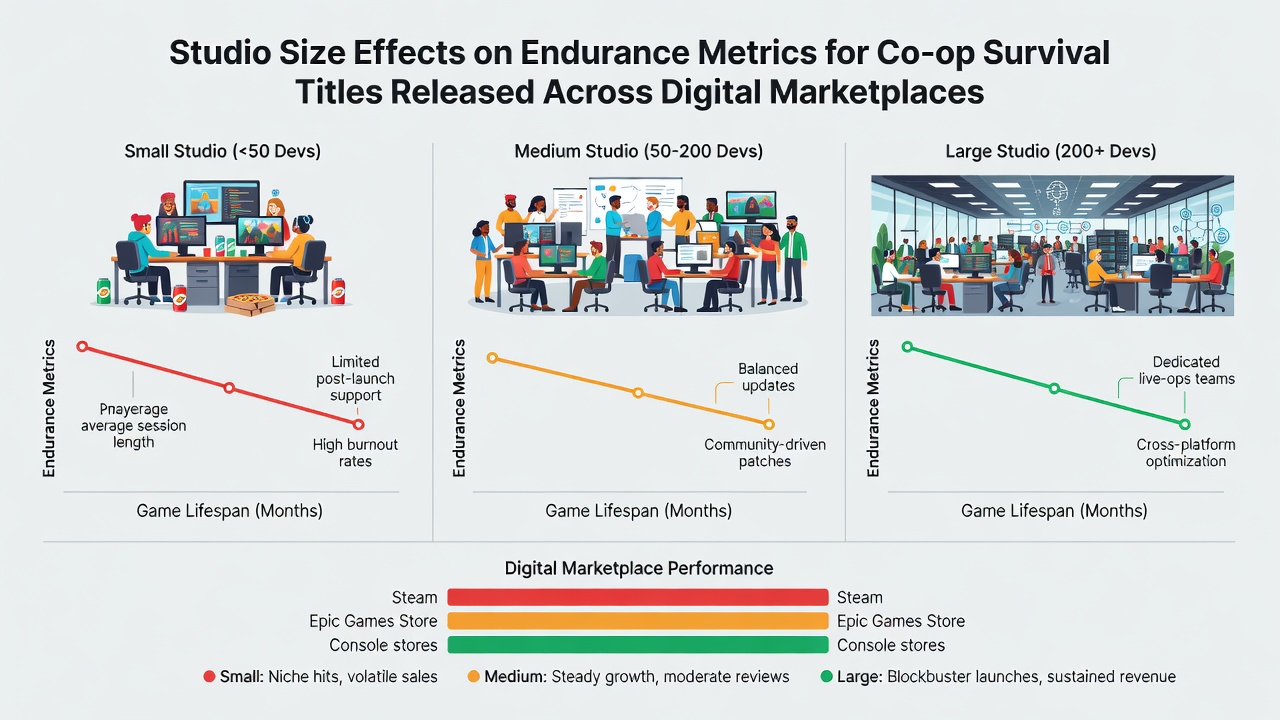
Digital storefronts aggregate telemetry that reveals small studios often record higher initial retention spikes within the first 30 days yet experience steeper declines by the 90-day mark compared with larger operations. Mid-sized teams demonstrate steadier curves where monthly active users stabilize between 40 adn 60 percent of launch peaks according to aggregated figures from multiple regions. Large studios maintain broader content pipelines that correlate with extended tail-end engagement extending past the one-year threshold. Observers note these patterns hold across Steam, Epic Games Store, and console digital services where survival mechanics require repeated group coordination.
Resource Allocation and Update Cadence
Small studios allocate limited personnel across core systems and post-launch support which results in fewer major content drops yet more focused balance adjustments that some player cohorts sustain over extended periods. Larger studios distribute tasks among specialized departments enabling simultaneous development of new biomes, enemy types, and progression systems that refresh endurance benchmarks on quarterly schedules. Mid-sized groups occupy an intermediate position where community-driven patches supplement scheduled releases and produce retention figures that sit between the other two categories. Figures from industry reports indicate that update frequency alone does not determine outcomes because quality and scope of changes interact with studio capacity constraints.
Regional Release Strategies and Marketplace Variables
Releases timed for North American and European markets show small studios achieving stronger word-of-mouth growth on Steam while larger studios leverage simultaneous console launches to distribute endurance metrics across additional player bases. Australian and Canadian platform data collected in 2025 and 2026 indicate similar divergence where small-team titles retain dedicated core groups through mod support ecosystems whereas large-team productions maintain wider casual audiences via cross-play features. According to the Entertainment Software Association, co-op survival genres recorded consistent year-over-year increases in average playtime across all studio sizes yet the rate of sustained engagement varied by development resources available after launch. European trade data compiled by the European Games Developer Federation further separates these trends by highlighting how localization and regional pricing influence retention longevity in mid-sized studio releases.
Telemetry Correlations With Team Composition
Analyses of publicly reported metrics demonstrate that studios with dedicated community managers regardless of overall headcount maintain higher 180-day retention rates than those without such roles. Small teams frequently rely on single individuals handling multiple functions which produces variability in response times to player feedback and subsequent endurance drops. Larger organizations embed analytics specialists who adjust difficulty curves and economy systems based on real-time cohort behavior leading to smoother retention trajectories. Researchers tracking titles released between 2023 and 2026 have documented that these internal structures influence whether survival loops continue to deliver meaningful progression after hundreds of hours.
Conclusion
Platform telemetry compiled through mid-2026 establishes clear associations between studio size and endurance outcomes in co-op survival titles although individual project variables such as genre execution and community management practices continue to modulate results. Marketplace operators and developers alike review these patterns when planning post-launch roadmaps that aim to extend player investment across digital ecosystems. Continued data collection will clarify whether emerging hybrid team models narrow the observed gaps between size categories.