Regional Pricing Variations and Rating Distributions in Strategy Releases on Emerging Storefronts
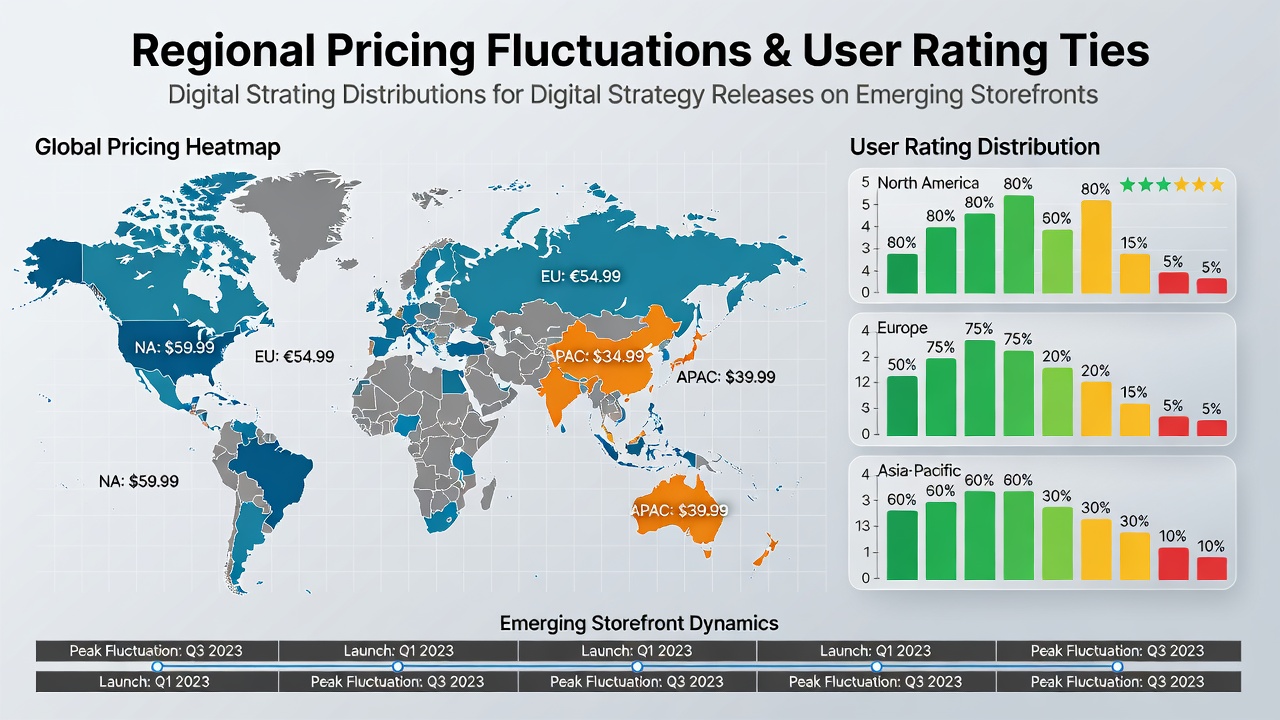
Regional pricing adjustments continue to shape how strategy titles perform on newer digital storefronts that target markets outside traditional Western hubs, and data collected through 2026 reveals measurable connections between those price points and the distribution of user ratings that follow each release. Platforms operating in Southeast Asia, Latin America, and parts of Eastern Europe have introduced dynamic pricing layers that respond to local purchasing power while also tracking engagement metrics after launch, and analysts note that these layers often produce rating spreads that differ from those seen on established global stores.
Price Structures Across Emerging Platforms
Storefronts such as the Epic Games Store expansion into additional regional servers, the growing presence of Garena's digital marketplace, and newer entrants like India's Gamezop network apply tiered pricing that lowers base costs by 20 to 45 percent compared with North American listings, while certain strategy titles receive further localized discounts during seasonal campaigns. These adjustments align with currency fluctuations and average disposable income figures reported by national statistics offices, and they create entry points that expand the total number of purchases without necessarily shifting the core demographic toward higher engagement levels.
Research compiled by the Interactive Software Federation of Europe indicates that titles priced below regional medians attract broader initial downloads, yet the same datasets show that subsequent rating clusters tend to spread more widely when users encounter performance expectations shaped by lower entry costs. Observers tracking these patterns point out that the correlation appears strongest in turn-based and real-time strategy genres where mechanical depth requires repeated sessions to appreciate fully.
Connections Between Pricing and Rating Spreads
User rating distributions on these storefronts frequently display bimodal patterns when price tiers diverge sharply from global averages, with clusters forming around both high satisfaction scores and lower marks tied to perceived value mismatches. Data aggregated from platform APIs during the first half of 2026 demonstrates that strategy releases offered at 30 percent or greater regional discounts recorded a 12 to 18 percent increase in one-star and two-star ratings compared with full-price counterparts on the same storefront, while five-star ratings remained relatively stable across price bands.
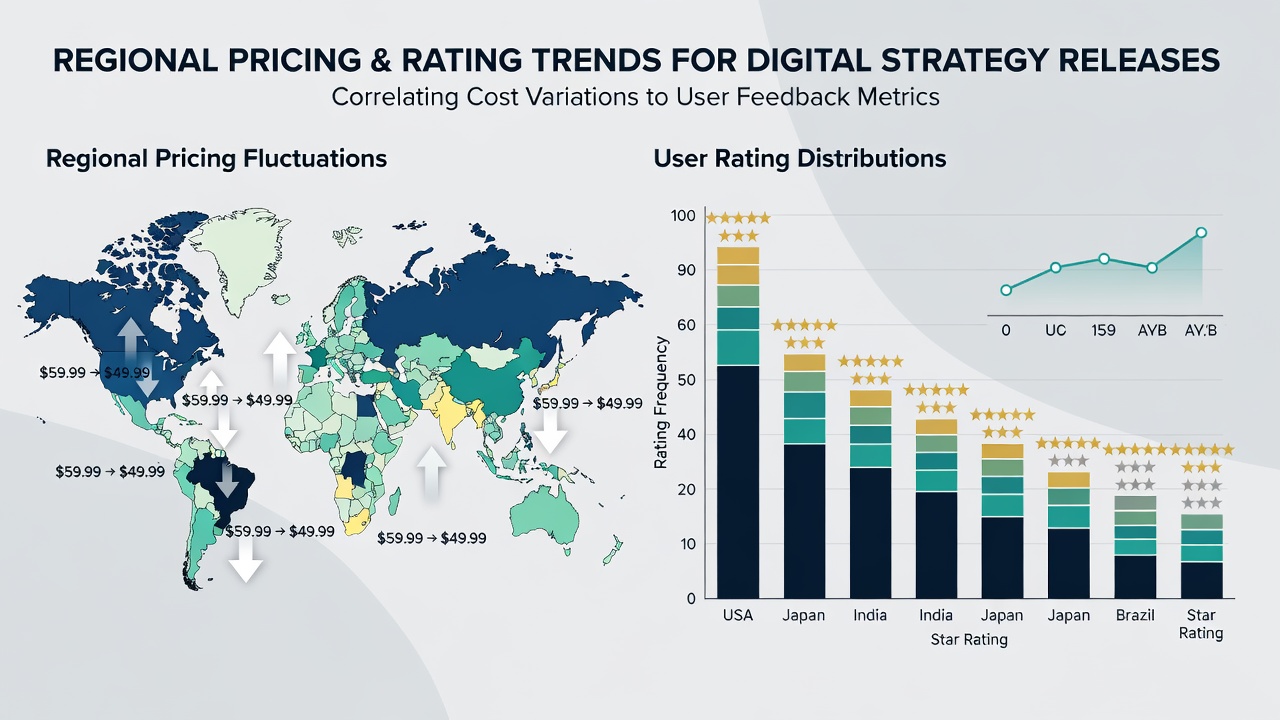
One study released by the National University of Singapore's Centre for Digital Media examined three strategy franchises that launched simultaneous regional campaigns on an emerging Southeast Asian platform in July 2026, and the findings showed that lower price tiers correlated with elevated review volume alongside wider variance in scores. Participants in the tracked cohorts cited factors such as hardware compatibility issues and tutorial pacing more frequently when the purchase price fell beneath a certain local threshold, suggesting that accessibility through pricing can surface previously underrepresented feedback categories.
Platform-Specific Examples and Data Trends
Garena's storefront recorded notable rating compression for a major strategy sequel that entered the market at 35 percent below its European listing price, while a smaller independent title priced closer to parity maintained tighter rating bands despite lower overall sales volume. Those who analyzed post-launch telemetry on the platform observed that users acquired through discounted regional offers completed fewer campaign missions on average before submitting ratings, which contributed to the observed spread.
Similar patterns surfaced on Latin American servers operated by a consortium of regional publishers, where strategy releases adjusted for local currencies produced rating distributions that shifted leftward in the first 30 days after launch. Figures released by Brazil's National Institute of Information Technology documented that titles maintaining consistent pricing across sub-regions experienced narrower standard deviations in user scores than those employing aggressive localized discounts.
Longer-Term Rating Stabilization
Over subsequent months, rating distributions on several emerging storefronts have shown gradual convergence toward global averages once patches and community updates address initial friction points, yet the early divergence tied to pricing remains visible in historical data archives. Analysts tracking multiplatform strategy releases note that titles which later introduced regional pricing harmonization saw secondary rating recoveries, particularly among users who returned after extended breaks.
Academic reviews from institutions such as the University of Melbourne's Digital Games Research Centre have tracked how these pricing strategies interact with review velocity, and the compiled evidence indicates that lower entry prices accelerate the accumulation of ratings without proportionally increasing positive sentiment when technical or design expectations go unmet.
Conclusion
Regional pricing fluctuations on emerging storefronts continue to influence the shape of user rating distributions for digital strategy releases, and ongoing data collection through mid-2026 underscores the persistence of these relationships across multiple geographic clusters. Platform operators and publishers monitoring these metrics have access to increasingly granular tools that map price tiers directly against rating outcomes, which in turn informs future regional release strategies without altering the underlying factual patterns already documented.