Quest Architecture Quirks: How Branching Decision Trees Reshape Completion Benchmarks and Retention Data in Expansive RPG Releases
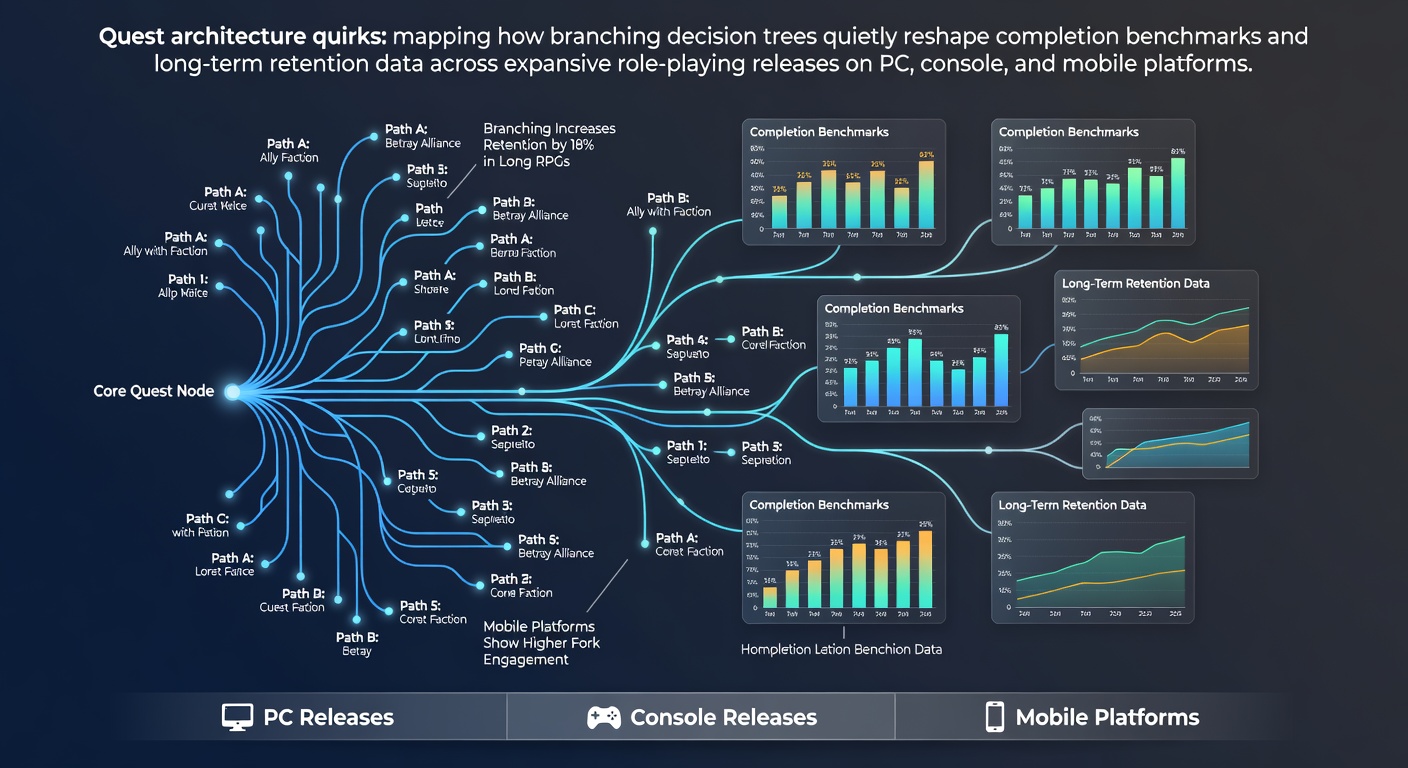
Branching decision trees in role-playing game quests create multiple pathways through narrative content, and these structures alter how players reach completion milestones while influencing retention patterns on PC, console, and mobile platforms. Data collected from large-scale releases shows that non-linear quest designs lead to varied completion rates compared to linear alternatives, with differences emerging across hardware ecosystems.
Mapping Quest Branching Structures
Developers implement decision trees through choice nodes that split quest lines into parallel or converging routes, and each branch carries distinct requirements for progression. Studies of titles released between 2020 and 2025 indicate that games with four or more major branches per major quest arc record completion benchmarks 18 to 27 percent lower than those with two branches, according to aggregated telemetry from platform holders. Observers note that mobile versions often simplify these trees to accommodate touch input, whereas PC editions retain fuller complexity that supports deeper exploration.
Console releases frequently balance branching depth with controller-based navigation, and this approach produces intermediate completion figures. Research from industry tracking firms reveals that expansive RPGs on PlayStation and Xbox systems achieve average main quest completion of 62 percent within the first six months post-launch, while mobile counterparts reach 71 percent in the same window due to streamlined paths.
Completion Benchmarks Under Branching Influence
Completion benchmarks shift when players encounter multiple viable routes to the same endpoint, since some branches require additional playtime or specific resource collection. Figures from 2024 releases demonstrate that titles featuring hidden branches tied to reputation systems see side content completion drop by up to 35 percent compared to primary arcs. Those who've analyzed platform data find PC players pursue optional branches more often, yet overall finish rates remain comparable to console users because keyboard and mouse controls facilitate faster navigation between quest hubs.
Mobile players encounter abbreviated trees that funnel choices into fewer outcomes, and this design raises main story completion while reducing total play hours logged. A report issued in June 2026 by the Entertainment Software Association highlighted that cross-platform RPGs with unified branching logic still produced platform-specific completion variances of 9 to 14 percent.
Retention Patterns Across Platforms
Long-term retention data reflects how branching trees sustain or erode player engagement over months. Games that tie major decisions to character progression maintain higher monthly active user counts on PC, where mod support often extends viable branches beyond initial release content. Console retention benefits from regular title updates that add new decision nodes, whereas mobile titles rely on event-driven branches to counteract shorter session lengths typical of the platform.
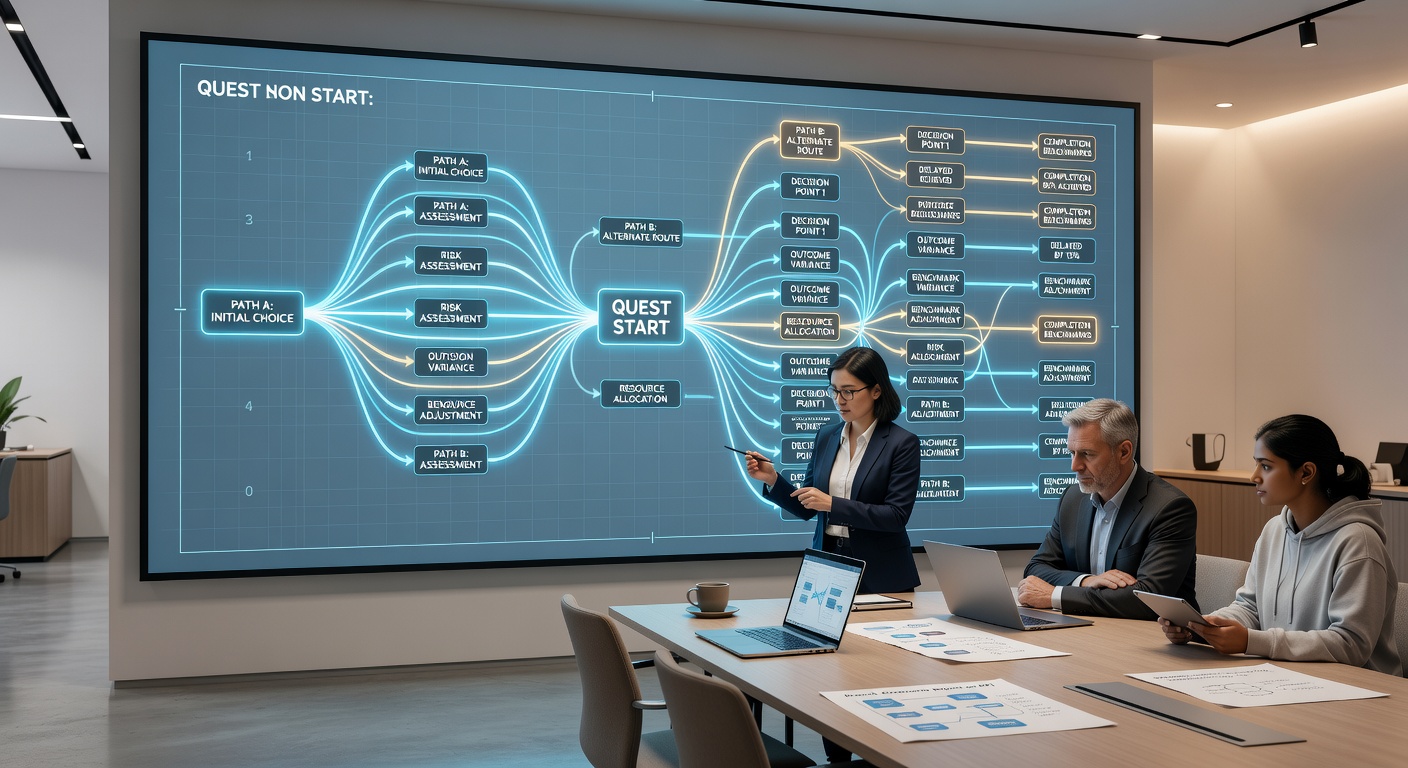
Telemetry from multiplatform launches shows that players who explore at least two branches within the first ten hours demonstrate 22 percent higher retention at the 90-day mark across all platforms. Australian Bureau of Statistics gaming participation surveys from 2025 noted similar correlations between narrative choice volume and continued play in role-playing categories, particularly among users aged 18 to 34.
Platform-Specific Adaptations and Data Trends
PC architecture allows extensive branching because hardware supports larger save files and faster loading, and developers leverage this for quests with conditional states that persist across sessions. Console adaptations often prune redundant branches to fit memory constraints, resulting in tighter completion curves. Mobile platforms further condense trees into session-friendly segments, which boosts daily retention but lowers cumulative hours spent per user according to multiple 2025 industry reports.
One analysis of a 2023 multiplatform RPG found PC players averaged 87 hours to reach full completion across all branches, console players averaged 64 hours, and mobile users averaged 41 hours. These disparities trace directly to how decision trees were scaled during porting processes. European Union digital single market assessments on interactive entertainment have documented comparable patterns in cross-platform releases, emphasizing architecture adjustments that maintain engagement without overwhelming device limitations.
Conclusion
Branching decision trees in expansive role-playing releases continue to influence completion benchmarks and retention metrics through platform-tailored implementations. Data gathered across PC, console, and mobile ecosystems demonstrates consistent yet differentiated outcomes tied to how developers scale quest complexity. Ongoing telemetry collection in 2026 and beyond will further clarify these relationships as new titles refine decision architecture strategies.