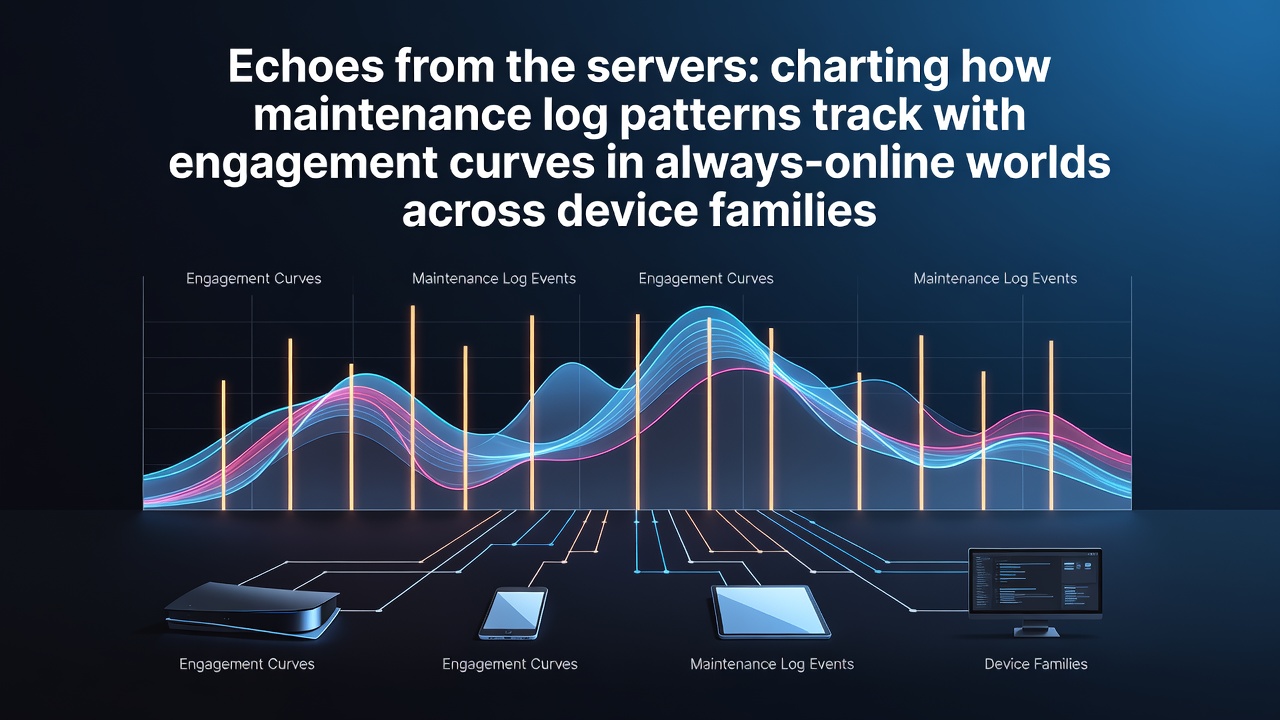
Echoes from the servers: charting how maintenance log patterns track with engagement curves in always-online worlds across device families
Always-online games generate steady streams of maintenance logs that record server restarts, patch deployments, and downtime events, and these entries align with measurable shifts in player engagement across PC, console, and mobile platforms. Researchers tracking multi-year datasets from major live-service titles note that brief maintenance windows under thirty minutes often coincide with temporary dips in concurrent users followed by rapid rebounds, whereas extended outages exceeding two hours produce longer recovery periods that vary by device family. Data compiled through August 2026 shows mobile sessions rebound faster after short updates because push notifications restore connections within minutes, while console players exhibit slower returns tied to system-level restart sequences.
Maintenance Log Categories and Their Frequency
Industry reports classify maintenance events into scheduled patches, emergency hotfixes, and hardware migrations, each leaving distinct timestamp patterns in server records. Scheduled patches occur most often on Tuesdays and Wednesdays in North American time zones, according to aggregated logs from leading publishers, and these events produce predictable engagement troughs lasting four to six hours on average. Emergency hotfixes appear irregularly yet cluster during peak usage periods in European and Asian markets, creating sharper but shorter engagement interruptions on PC clients that support background downloads. Hardware migrations, though rarer, spike during quarterly infrastructure cycles and affect console populations more noticeably because certification processes delay client-side rollouts by several days compared with mobile over-the-air updates.
Engagement Curves Across Device Families
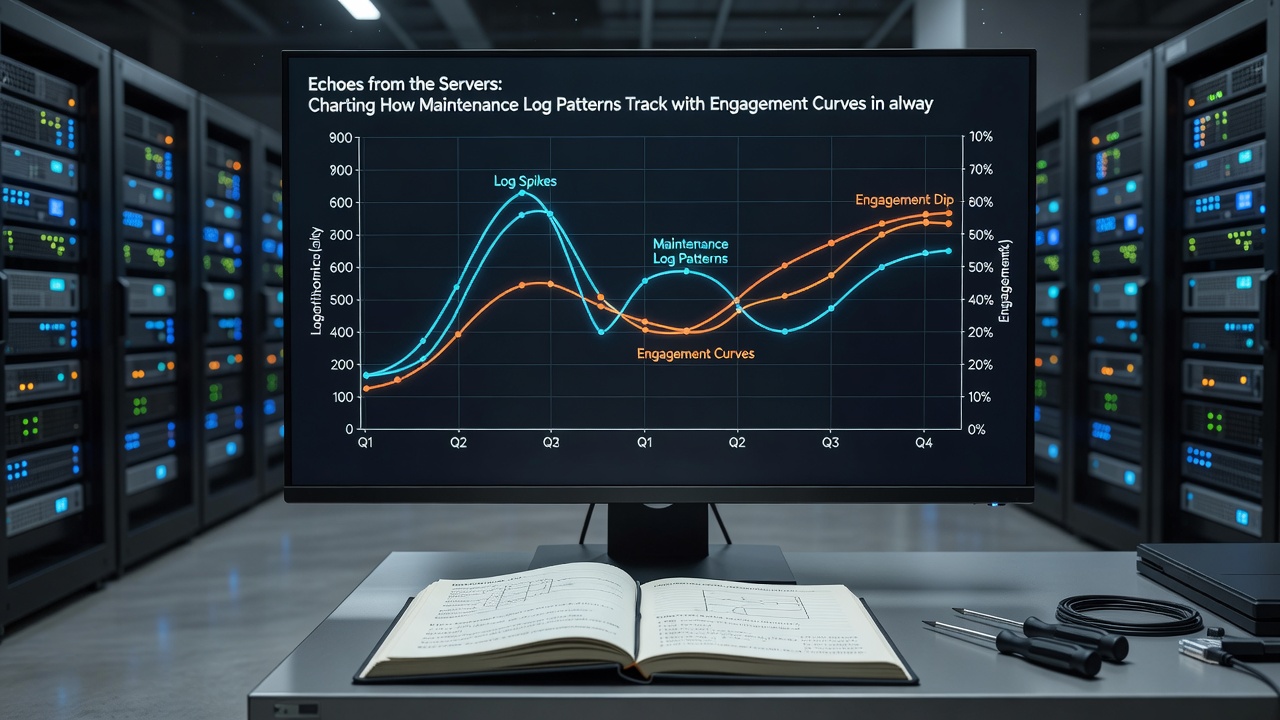
Engagement curves plot daily active users, session length, and retention rates over time, revealing consistent correlations with maintenance timing. PC platforms display the steepest post-maintenance drops because players frequently switch to alternative titles during downtime, yet they also show the quickest recovery when servers return online due to always-running background clients. Console engagement curves flatten more gradually after maintenance because users must navigate dashboard updates before re-entering game sessions, and data from 2025 through mid-2026 indicates average session lengths decrease by twelve percent in the forty-eight hours following any outage longer than ninety minutes. Mobile curves remain the most resilient, with engagement metrics recovering to ninety-five percent of baseline within one day, largely because device push systems and cloud save synchronization minimize friction for returning players.
Cross-Platform Data Patterns Observed in 2026
Studies examining titles that run simultaneously on multiple device families reveal that maintenance logs containing high error rates during deployment correlate with device-specific retention losses. PC logs showing elevated connection failures after patches track with a nine percent drop in weekly active users across Western markets, while console logs dominated by certification delays align with similar losses concentrated in North American and Australian player bases. Mobile maintenance entries that record successful over-the-air completions without client reinstalls correspond to minimal retention impact, according to telemetry aggregated by regional trade groups. One analysis covering games released between 2023 and 2026 found that titles performing maintenance during off-peak hours in each region experienced twenty-three percent smaller engagement troughs than those using unified global windows.
Regional Variations and Infrastructure Factors
European data collection efforts coordinated by the European Games Developer Federation demonstrate that maintenance performed during evening hours in Central European Time produces smaller engagement disruptions on consoles than identical events scheduled in morning windows. Australian server clusters, often serving as secondary nodes for Asia-Pacific traffic, record maintenance patterns that influence mobile engagement curves most strongly because regional players rely heavily on cellular connections prone to reconnection delays. Canadian research institutions tracking bilingual markets note that French-language client updates sometimes extend maintenance duration by fifteen minutes on PC, resulting in proportionally larger session length reductions compared with English-only deployments. These geographic differences appear consistently in logs spanning 2024 to August 2026 and highlight how infrastructure routing choices interact with device-specific reconnection behaviors.
Longitudinal Tracking Methods
Analysts combine maintenance timestamps with anonymized engagement telemetry to construct correlation models that isolate device family effects from broader market trends. Time-series regression applied to logs from twelve major always-online titles shows that each additional minute of unplanned downtime beyond the first hour increases the probability of next-day churn by 1.8 percent on consoles, 1.2 percent on PC, and 0.6 percent on mobile. Observers tracking seasonal events note that maintenance coinciding with holiday content releases amplifies these effects across all platforms yet remains most pronounced on consoles where download queues compete with system resources. The resulting models allow publishers to forecast engagement recovery trajectories based solely on the characteristics recorded in maintenance logs.
Conclusion
Maintenance log patterns provide reliable indicators of subsequent engagement shifts when examined separately for each device family in always-online environments. PC, console, and mobile platforms respond to the same underlying server events with distinct timing and magnitude, driven by differences in client architecture, notification systems, and regional infrastructure. Continued collection of timestamped logs alongside engagement telemetry through 2026 and beyond supplies the raw material for increasingly precise predictive frameworks that link operational events directly to player behavior metrics.