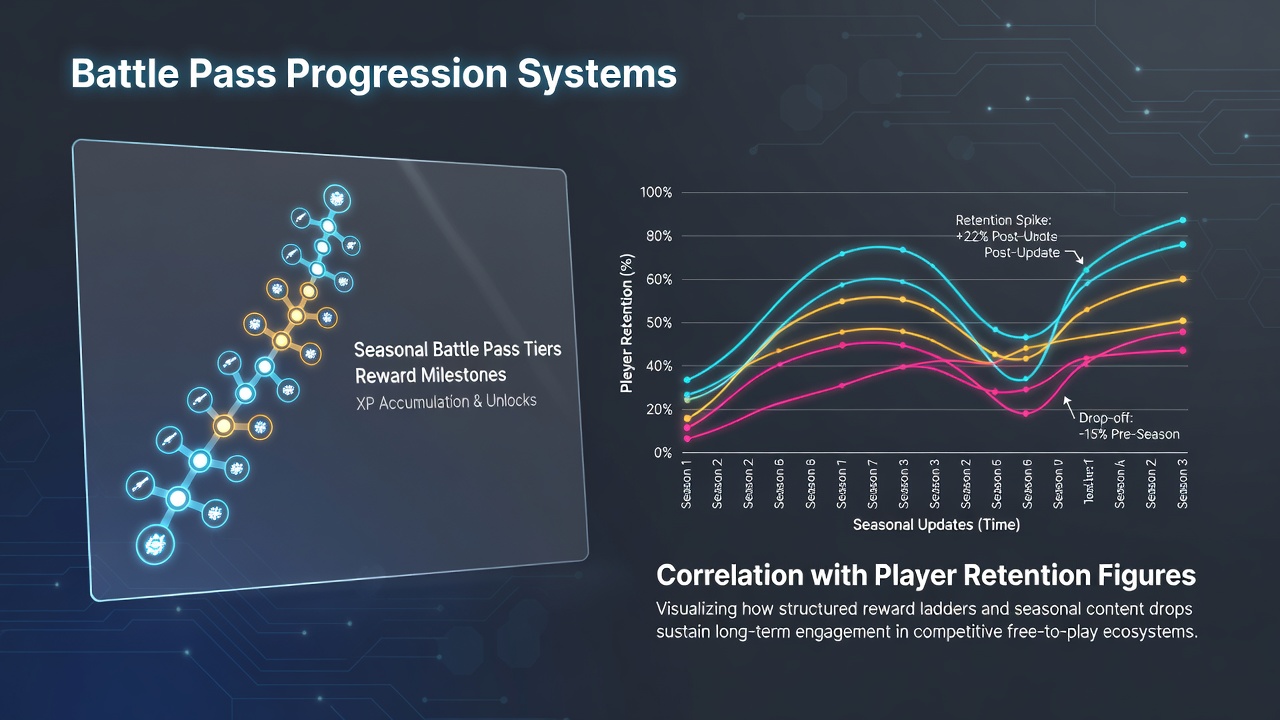
 Battle pass systems have become a standard feature in free-to-play shooters since their introduction in titles like Fortnite back in 2017, and they continue to evolve with each seasonal cycle. These progression tracks offer players tiered rewards for completing challenges and accumulating experience points, with premium versions unlocking additional cosmetic items and sometimes exclusive weapons or characters. Data collected across multiple platforms shows that these systems often correlate with measurable changes in daily active user counts and session lengths, particularly when developers adjust reward pacing or introduce new seasonal themes.
Core Mechanics of Battle Pass Progression
Players earn progression through a combination of daily and weekly challenges alongside standard match-based experience gains, which creates a structured loop that encourages repeated logins. Research from industry reports indicates that free tiers typically provide 50 to 100 levels of rewards while premium passes add another layer of exclusive content, and completion rates vary widely depending on the season length. In many cases developers reset progress at the end of each season, which resets player investment and ties directly into the next content drop.
Studies tracking player behavior reveal that shorter seasons lasting six to eight weeks tend to produce higher completion percentages compared with longer cycles that stretch beyond ten weeks, because the perceived grind feels more manageable within tighter timeframes. Observers note that challenge design plays a key role here, with tasks that align with standard gameplay modes boosting engagement metrics more effectively than those requiring specialized modes or high-skill actions.
Retention Patterns Across Seasonal Updates
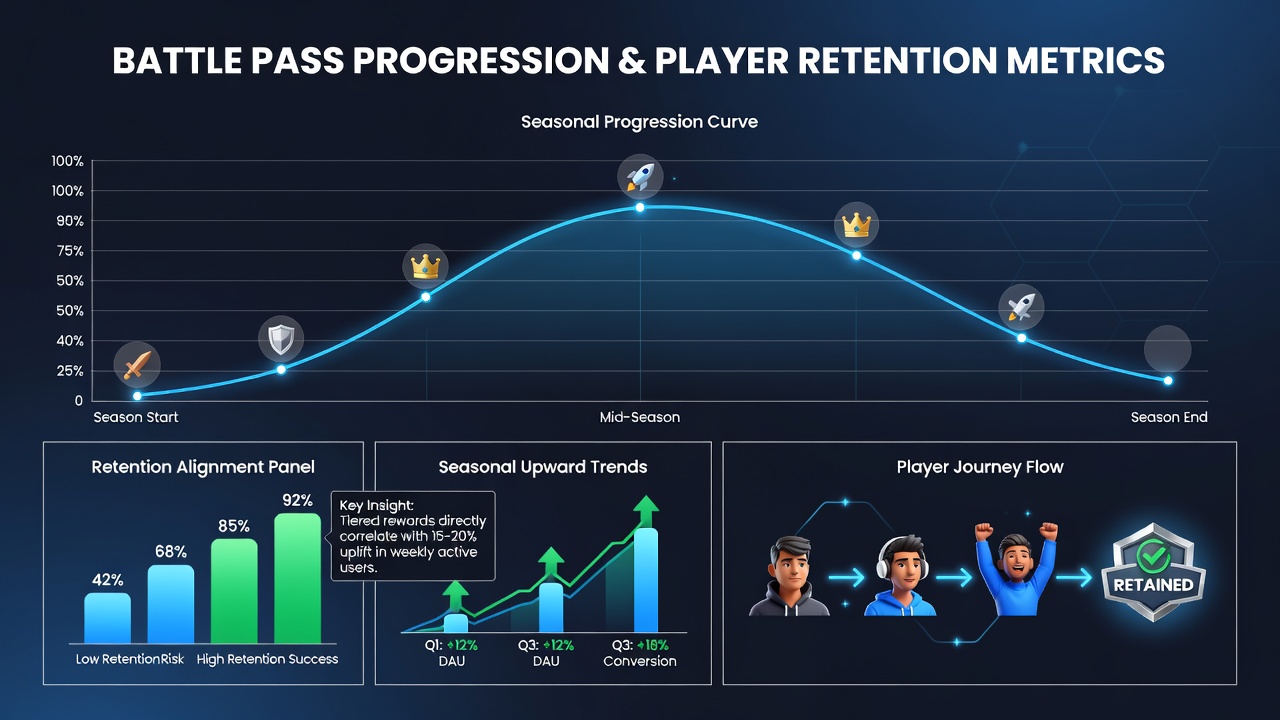
Retention figures often spike immediately after a new season launches and then taper as players approach the final tiers, according to aggregated telemetry shared in developer transparency reports. For instance, one analysis of several major free-to-play shooters found that daily active users rose by an average of 15 to 25 percent in the first two weeks of a season before stabilizing or declining if the reward track felt repetitive. Those who've examined long-term data across multiple titles observe that players who purchase the premium pass show stronger retention into the following season compared with free-tier participants, likely because the sunk cost motivates continued play.
What's interesting is how mid-season updates influence these numbers, since targeted balance changes or surprise reward boosts frequently reverse early drop-offs. In June 2026, several studios released mid-cycle adjustments that included accelerated experience gains for underplayed modes, and the resulting data showed measurable lifts in weekly retention rates for affected titles. External factors such as overlapping events from competing games also play a part, creating a competitive landscape where battle pass pacing must adapt to maintain player attention.
Comparative Data from Leading Titles
Take Apex Legends, which has refined its battle pass structure over multiple years to include both standard and prestige tracks, and data shows that prestige rewards correlate with extended play sessions among dedicated users. Valorant similarly structures its passes around agent unlocks and gun skins, with researchers finding that agent-specific challenges drive higher engagement in ranked playlists. Fortnite continues to experiment with hybrid passes that blend battle royale and creative mode objectives, and figures released by the Entertainment Software Association highlight how these cross-mode requirements affect overall platform retention across consoles and PC.
Another study conducted by academic researchers at a Canadian institution tracked retention curves for several shooters and determined that passes featuring collaborative challenges produced stronger community retention than solo-focused tracks. The reality is that regional differences appear as well, with players in certain markets responding more positively to passes that emphasize social features over individual progression milestones.
Challenges and Adjustments in Design
Developers face ongoing pressure to balance accessibility with monetization goals, since overly aggressive time gates can lead to player frustration and reduced login frequency. Data indicates that when completion rates fall below 30 percent for premium pass holders, subsequent seasons see measurable dips in new purchases. But here's the thing: many studios now incorporate catch-up mechanics such as double experience weekends or purchasable level skips, which help stabilize retention numbers even when early challenges prove difficult.
Industry organizations such as the Interactive Software Federation of Europe have documented how these adjustments affect long-term player bases, noting that transparent communication about upcoming changes often mitigates negative reactions. Observers point out that titles maintaining consistent reward quality across seasons tend to sustain higher retention baselines compared with those that alternate between generous and restrictive tracks.
Conclusion
Battle pass progression continues to serve as a central driver of seasonal engagement in free-to-play shooters, with retention figures showing clear alignment to reward structure, season length, and mid-cycle adjustments. As developers refine these systems based on ongoing telemetry, the patterns observed through 2026 suggest that flexible pacing and varied challenge types remain key factors in sustaining player participation across updates. Continued monitoring of these metrics will likely shape future iterations of battle pass design across the genre.