Achievement Rarity Patterns Reshaping Perceived Difficulty Curves in Puzzle Collections Across Digital Storefronts
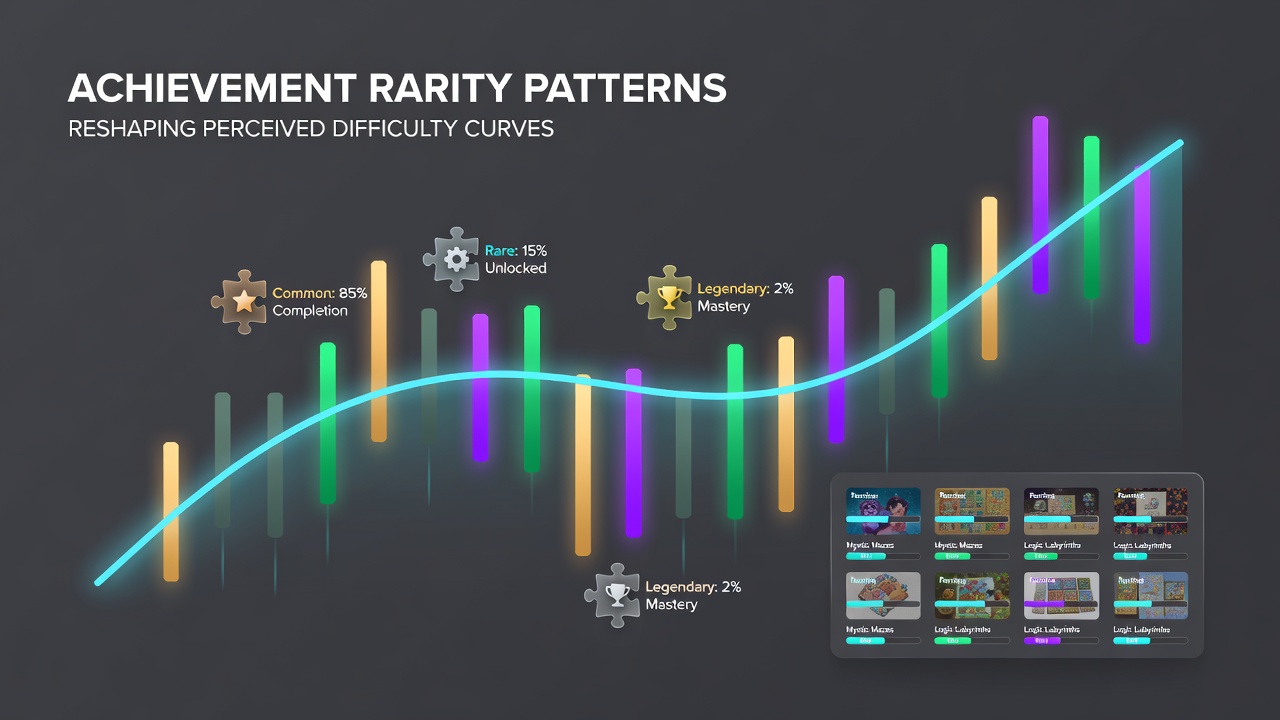 Achievement rarity data from major digital storefronts continues to influence how players gauge puzzle game difficulty, with patterns emerging in completion statistics that shift expectations around challenge levels. Researchers tracking these metrics across platforms observe that games featuring achievements held by fewer than 5 percent of players often register higher perceived difficulty scores in community aggregates, even when core mechanics remain consistent with titles that boast more common unlocks. Data compiled through July 2026 reveals consistent correlations between rarity thresholds and player behavior in puzzle collections. Platforms such as Steam and the Epic Games Store display these percentages directly on achievement pages, allowing users to compare their progress against global benchmarks. Observers note that when a puzzle title releases with multiple rare achievements tied to advanced levels or time-based challenges, aggregate completion rates for the base game drop by measurable margins within the first three months post-launch.
Platform-Specific Rarity Distributions
Storefront algorithms weight rarity displays differently, which affects visibility of difficulty signals. Steam surfaces percentage-based rarity for every achievement while Epic emphasizes absolute unlock counts in its interface, creating divergent player interpretations of the same underlying data sets. Studies from the Entertainment Software Association indicate that these display variations lead to distinct engagement patterns, with Steam users more frequently referencing rarity percentages when selecting subsequent puzzle titles.
Cross-platform releases demonstrate how rarity patterns recalibrate over time. A puzzle collection initially showing 12 percent rarity for its hardest mode on one storefront often sees that figure decline to under 8 percent within six months as dedicated players optimize routes and share solutions. Yet the initial rarity snapshot continues to shape early review language and wishlist additions, locking in a perceived difficulty curve that persists beyond actual player improvements.
Impact on Player Progression and Collection Curation
Curators on digital storefronts incorporate achievement rarity filters when assembling puzzle bundles, which surfaces collections weighted toward higher challenge tiers. Players browsing these curated lists encounter titles where rare achievements cluster around specific mechanics such as multi-step logic sequences or environmental manipulation puzzles. This curation process amplifies visibility for games whose rarity profiles signal steeper learning curves compared to more accessible entries in the same genre.
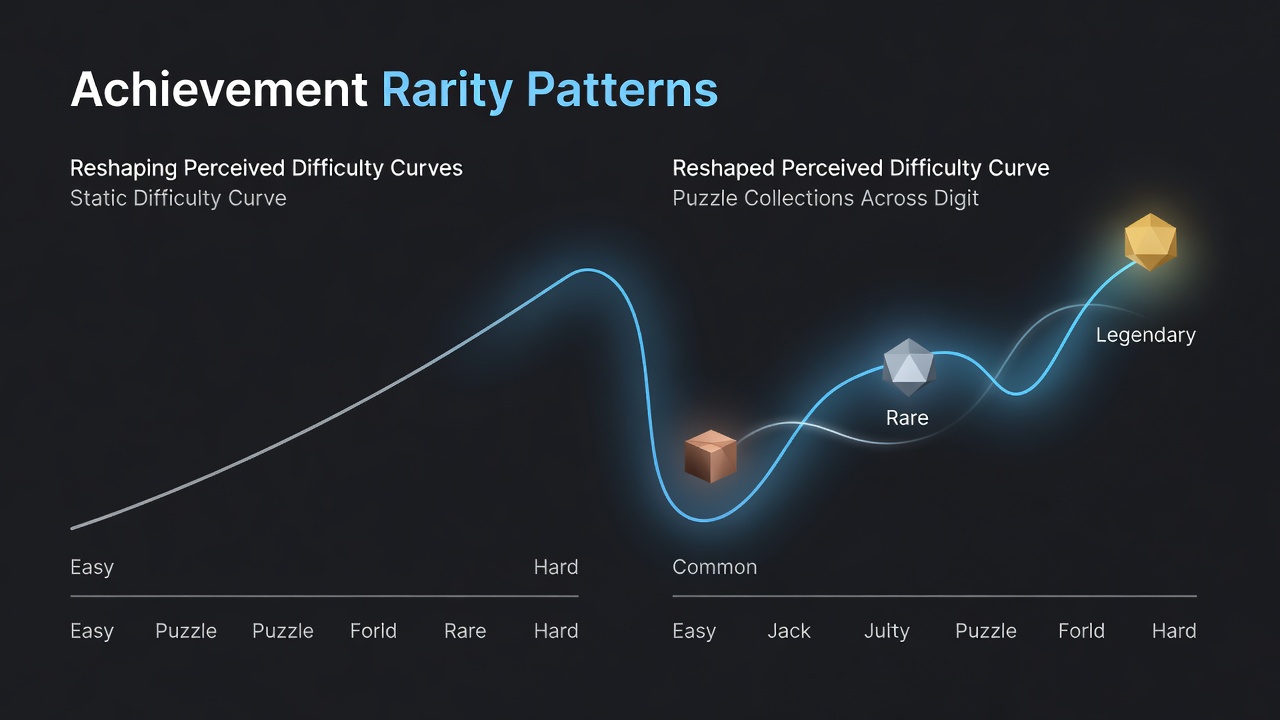
Figures from university-led analyses of achievement databases show that puzzle games with rarity distributions skewed toward the lower end correlate with extended session lengths per player. Those who've examined telemetry records across thousands of accounts find that individuals who unlock one rare achievement in a collection tend to pursue additional rare unlocks at higher rates than players starting with common achievements. This behavioral loop reinforces the connection between rarity visibility and sustained engagement with difficult content.
Regional Variations in Rarity Perception
Geographic differences appear in how rarity data translates into difficulty expectations. Reports compiled by European industry groups highlight that players in certain markets prioritize achievement rarity when evaluating puzzle difficulty more than users in other regions, where completionist metrics receive less emphasis. These variations influence how publishers time achievement-related updates and balance patches for global releases.
Retail data from July 2026 demonstrates that puzzle collections featuring prominently displayed rare achievements maintain steadier sales velocity in the months following initial launch compared to titles whose rarity profiles remain opaque until after purchase. Platform analytics further reveal that search queries incorporating terms like "hard achievements" or "rare unlocks" spike during periods when new puzzle collections enter storefront front pages.
Conclusion
Achievement rarity patterns continue to function as informal difficulty indicators across digital storefronts, guiding both individual player choices and broader collection strategies. The data patterns observed through mid-2026 underscore measurable links between unlock percentages, progression behaviors, and how puzzle titles position themselves within competitive genre landscapes. As storefront interfaces evolve their presentation of these statistics, the relationship between rarity visibility and perceived challenge will likely sustain its influence on how collections are discovered and evaluated.